
In today’s busy business world, online ads have become a key way to attract customers, get new leads, and boost sales.
Whether you run a small local shop, a service company, a real estate business, a restaurant, or an online store, picking the right ad platform can really change how well your marketing works.
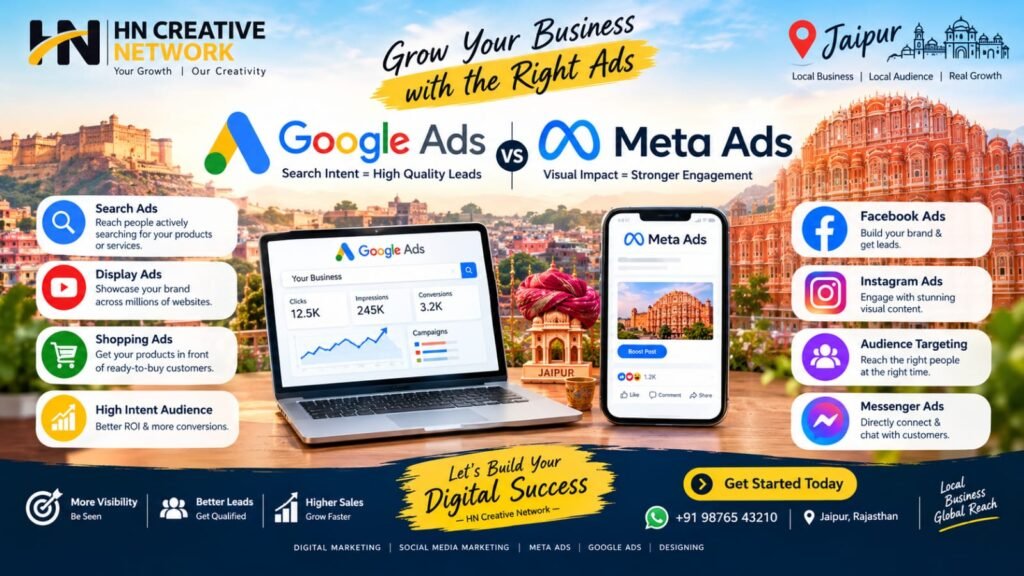
Two of the most popular ad platforms are Google Ads and Meta Ads.
Both have strong tools, but they work in different ways and are used for different marketing goals.
Google Ads helps businesses reach people who are looking for products or services.
Meta Ads lets businesses connect with audiences through ads on Facebook, Instagram, Messenger, and other platforms.
For businesses in Jaipur, knowing the differences between these platforms can help you make smarter advertising choices.
At HN Creative Network, we help businesses grow their digital presence and create ad strategies that match their goals.
In this guide, we’ll compare Google Ads and Meta Ads, explain their benefits, and help you choose which one is best for your business.
What Are Google Ads?
Google Ads is an online ad platform that lets businesses promote their products and services on Google’s network.
Depending on the type of campaign, ads can show up in Google Search results, on websites that work with Google, on YouTube, and other places.
One big advantage of Google Ads is search intent.
People searching for something may already be looking for a solution.
For example, someone searching for “digital marketing agency in Jaipur” might be actively looking for a marketing service provider.
Types of Google Ads
Search Ads
Text ads that appear when people search for related keywords on Google.
These are great for reaching customers who are looking for something specific.
Display Ads
Visual ads that appear on websites and apps that are part of the Google Display Network.
These help businesses build awareness and reconnect with people who are interested in their products or services.
Shopping Ads
Product-focused ads that show images, prices, and other details for eligible businesses.
These are especially useful for online stores.
YouTube Ads
Video ads that help businesses promote their products, services, and brand to people who are likely to be interested.
Performance Max Campaigns
Goal-based campaigns that use multiple Google ad channels to help achieve things like getting more sales or conversions.
Google Ads are especially good when people are already searching for what your business offers.
What Are Meta Ads?
Meta Ads is the advertising platform used to create and manage campaigns across Meta’s platforms, such as Facebook and Instagram.
Meta Ads is great for building brand awareness, promoting products with visuals, reaching specific groups of people, and getting people interested in your business.
Unlike search ads, which often respond to what people are searching for, Meta Ads can introduce your business to people who may be interested in your products or services even if they’re not actively looking for them.
Types of Meta Ads
Image Ads
Single-image ads that show your product, offer, or service.
Video Ads
Video ads that show your product, explain your service, or tell your brand’s story.
Carousel Ads
Ads that let you show multiple images or videos in one ad.
Lead Ads
Ad formats that make it easy to collect information from potential customers using forms.
Click-to-Message Ads
Ads that encourage users to start a conversation through messaging apps, depending on campaign settings.
Retargeting Campaigns
Campaigns that reconnect with people who have already visited your website, used your services, or interacted with your content, as long as tracking is allowed and the platform permits it.
Meta Ads can be very effective for businesses that want to grab attention, build interest, and create connections with potential customers.
Google Ads vs Meta Ads: Key Differences
1.
Audience Intent
Google Ads is especially good for reaching people who are actively searching for a specific product or service.
For example, someone searching for “best wedding photographer in Jaipur” might already be thinking about hiring a photographer.
Meta Ads, on the other hand, focuses more on finding and engaging with people based on their interests, behaviors, and what they’ve seen before.
For example, a wedding photographer can use Instagram and Facebook to show their work to people who might be interested in their services.
Best choice: Google Ads is good for reaching people who are already searching for something specific; Meta Ads is good for creating interest and finding new customers.
2.
Audience Targeting
Google Ads lets businesses reach people based on what they search for, where they live, and other settings.
Meta Ads helps target people based on where they live, what they like, their age, and other factors, depending on the campaign type.
A local business in Jaipur can use either platform to focus on customers in their area.
Best choice: Both platforms have good targeting tools.
The better one depends on how customers find out about and choose your business.
3.
Advertising Costs
How much you pay for ads depends on competition, the audience, the industry, the quality of the ad, and other things.
Google Search Ads usually charge per click, but there are other ways to bid and run campaigns.
Meta Ads can be set up to focus on getting impressions, clicks, lead forms, or conversions, depending on the goal you choose.
Neither platform is always cheaper.
A low cost per click might not bring in good leads, while a higher cost could lead to a valuable customer.
Best choice: Look at cost per qualified lead, conversion rate, and how much it costs to get a customer instead of just looking at clicks.
4.
Lead Generation
Google Ads can help when people are actively looking for services like website design, home repairs, training, or marketing help.
Meta Ads can help collect leads through quick forms, landing pages, and messaging.
For example, a coaching institute in Jaipur could try Google Search Ads to reach people looking for specific courses and Meta Ads to share course benefits and collect interest.
Best choice: Test the platform that fits best with how your customers decide to choose your service.
5.
Creative Content
Google Search Ads mainly use text, good headlines, and useful landing pages.
Other Google campaigns may use images, videos, or product listings.
Meta Ads often depend on visual content like images, short videos, video reels, and image carousels.
Businesses that offer visually appealing products or services can benefit from strong creative content on Meta platforms.
Best choice: Use Meta Ads to tell a story with visuals and show products; use Google Search Ads to respond to people searching for something specific.
6.
Measuring Results
Both platforms give report tools to help advertisers check how well their campaigns are doing.
Google Ads gives data on clicks, views, conversions, and ad costs.
Meta Ads reports performance based on what the campaign is set up for and how it’s tracked.
Businesses can also use conversion tracking and other analysis tools to see what happens after someone clicks on an ad.
Good measurement is important because leads, sales, and profitable customers matter more than just traffic.
Best choice: Both platforms can support performance-based marketing if campaigns are set up and tracked correctly.
Which Platform Is Better for Local Businesses in Jaipur?
The best choice depends on your industry, audience, what you’re offering, and your marketing goals.
Here are some examples:
Restaurants and Cafes: Meta Ads can show food, the ambiance, special deals, and customer experiences.
Google Ads can reach people searching for restaurants in a specific area.
Real Estate Businesses: Google Search Ads can reach people looking for properties or real estate services.
Meta Ads can show property photos, videos, and project details to interested people.
Coaching Institutes: Google Ads can reach people looking for courses and training centers.
Meta Ads can promote offer details, course benefits, and educational content.
Digital Marketing Agencies: Google Search Ads can reach businesses actively looking for marketing services.
Meta Ads can build brand awareness and get leads through creative campaigns.
Retail and E-commerce Stores: Meta Ads can show products through visuals, while eligible businesses can use Google Shopping and Search ads to reach customers looking for specific items.
These are starting points, not guarantees.
Campaign success should be judged by real business results.
Should You Use Google Ads and Meta Ads Together?
For many businesses, using both Google Ads and Meta Ads together can create a better overall marketing plan.
Google Ads can help catch people who are actively searching for something.
Meta Ads can help raise awareness, display products, and keep your audience interested.
A business might use Google Search Ads to bring in people who are actively looking for something, and Meta Ads to show off new products or reach people who have interacted with the brand before.
But it’s not necessary for every business to use both platforms.
If your budget is tight, it might be better to start with one well-planned campaign, check how it’s doing, and add more when you see good results.
A good strategy should be based on your business goals, not just on spending more money on ads.
How HN Creative Network Can Help
At HN Creative Network, we help businesses find digital marketing solutions that improve their online presence, connect with customers, and generate leads.
Our services include:
- Google Ads Management: Planning campaigns, researching keywords, creating ads, and improving performance.
- Meta Ads Management: Planning Facebook and Instagram campaigns, testing creative ideas, and generating leads.
- Search Engine Optimization (SEO): Boosting visibility in organic search results and improving website content.
- Social Media Marketing: Building a consistent online image and engaging with the right audience.
- Graphic Design: Making professional marketing materials for your digital campaigns.
- Website Solutions: Creating a strong online presence for your business.
We believe ads should match your business goals, target audience, and budget.
It’s important to regularly review how your campaigns are performing to find new opportunities.